I. The Moment
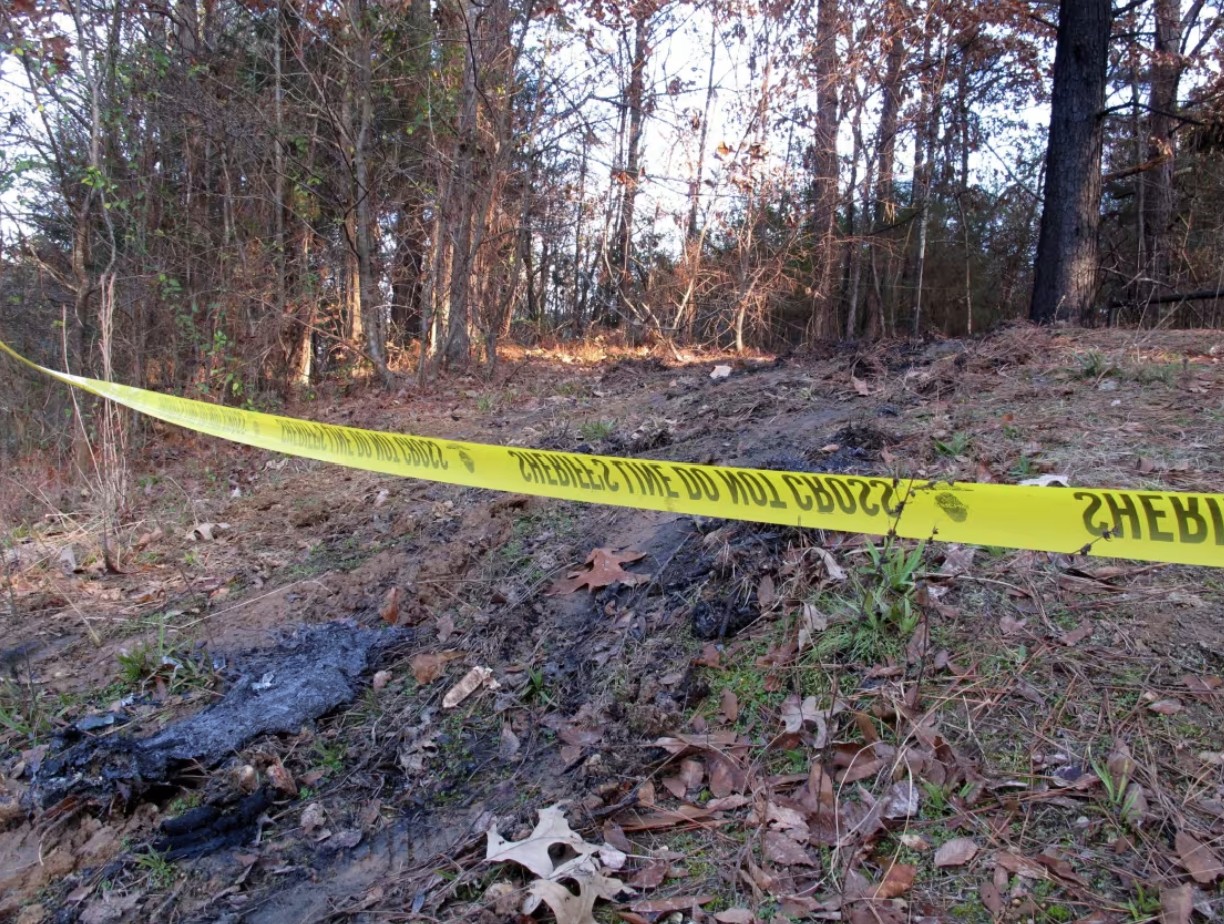
In December 2014, Jessica Chambers was found beside her burning vehicle on a rural Mississippi road.
She had been set on fire.
She was alive — barely.
Emergency responders attempted to extract information. In severe distress, she allegedly named her attacker.
It sounded clear enough in the moment.
It should have been the end of the question.
It wasn’t.
II. The Power of a Dying Declaration
Under American law, a dying declaration carries unique weight.
The assumption is simple:
A person facing death has no reason to lie.
Historically, courts have allowed such statements as exceptions to hearsay rules because they are believed to possess inherent reliability.
But law is not built on emotion.
It is built on clarity.
In this case, the name reportedly spoken by Jessica Chambers was transcribed differently by different individuals present.
Some heard one name.
Others heard another.
Phonetics blurred under trauma, smoke inhalation, and catastrophic injury.
The declaration became the center of the case.
And the center began to wobble.
III. The Charge
Quinton Tellis was charged with her murder.
Prosecutors argued that Jessica had clearly identified him.
They pointed to:
- Alleged relationship dynamics
- Phone records
- Circumstantial positioning
- The dying declaration itself
The state presented a theory.
It felt cohesive.
Outside the courtroom, many believed the matter was settled.
Inside, the standard was different.
IV. The Trials
Two separate trials.
Two hung juries.
A hung jury is not an acquittal.
It is not an exoneration.
It is a failure to reach unanimous agreement.
In criminal court, unanimity is not optional.
If even one juror maintains reasonable doubt, the verdict cannot stand.
Twice, jurors could not reach that threshold.
Twice, certainty fractured.
V. What Jurors Must Decide
Jurors are instructed to evaluate evidence, not emotion.
They must determine:
- Was the dying declaration clear?
- Was it reliable under extreme trauma?
- Was the defendant’s presence proven beyond reasonable doubt?
- Did circumstantial evidence close the gap?
The courtroom does not operate on likelihood.
It operates on proof.
And proof must survive scrutiny from twelve individuals.
In this case, it did not.
VI. Narrative vs. Evidence
The power of a dying declaration is psychological as much as legal.
It feels final.
It feels sacred.
It feels unquestionable.
But feelings do not decide verdicts.
Jurors are permitted — even required — to question:
- Whether sound was misheard
- Whether injury impaired articulation
- Whether suggestion influenced interpretation
The public often confuses belief with proof.
Courtrooms cannot.
VII. The Fracture
This is not a story about a confirmed lie.
It is a story about instability.
When a case appears emotionally resolved but legally unresolved, the fracture becomes visible.
Two mistrials do not declare innocence.
They declare uncertainty.
That distinction matters.
VIII. The System Question
If dying declarations are considered powerful evidence, what safeguards exist when clarity is contested?
How should courts balance:
- Emotional gravity
- Forensic gaps
- Conflicting interpretation
When a name is spoken under catastrophic injury, who determines what was truly said?
And how certain must we be before calling it decisive?
IX. Closing
A name was spoken.
Or perhaps it was.
Outside the courtroom, many were sure.
Inside the courtroom, twelve citizens were not.
Certainty can feel absolute.
But in law, certainty must endure examination.
When it doesn’t, the verdict pauses.
And pause is not the same as closure.